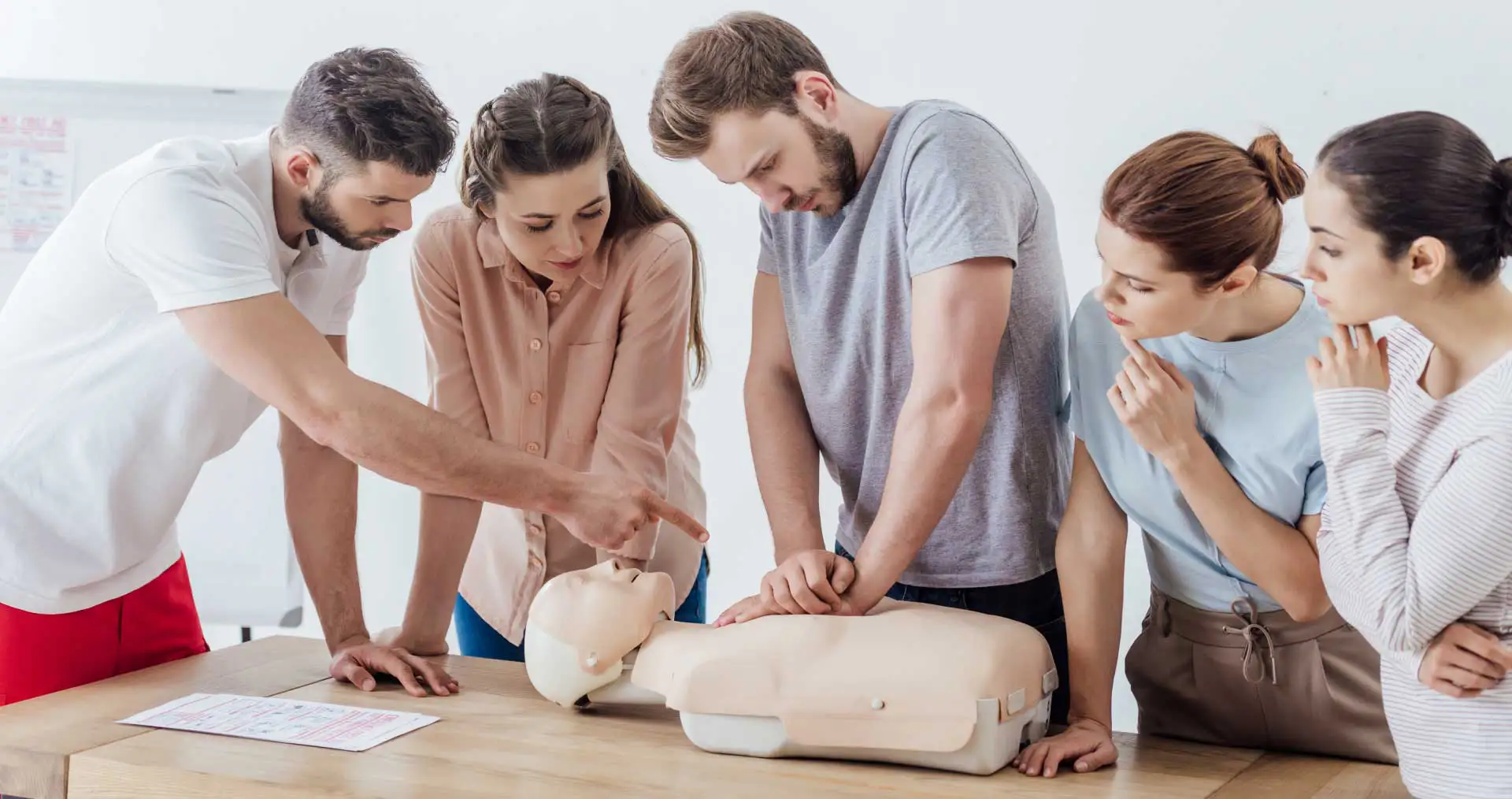
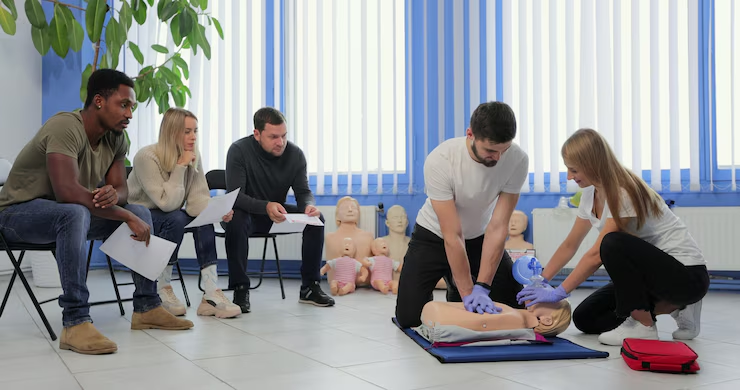
Before a doctor ever declares that a person is no more, what do you think happens? Sure, they do their best at treating the patient, but sometimes, they can’t be saved. So, could a person certified with a BLS CPR instructor course in Plano provide immediate help? The answer is yes. CPR Training Clinic is confident that you and anyone you train can help prevent a person from brain damage and other extreme health issues.
Expand your knowledge about Basic Life Support with us here.
Importance of the BLS CPR Instructor Course In Plano
Job markets are suffering worldwide, but in Plano, things are different. While this city is celebrated for its vast business and employment opportunities, its population experiences a gradual surge. Unfortunately, the large city in Northern Texas also has its fair share of high mortality rates due to heart disease.
These numbers tie closely to the growing cases of cardiovascular diseases (CVD) and the risk of acquiring the disease across Texas. The rising frequency of high blood pressure and cholesterol levels, along with obesity, actively contributes to putting anyone at grave risk of developing CVD.
Though Plano is doing well with its low crime rates, more people are at risk of losing their lives to medical conditions. The risk can persist due to a lack of bystander rescuers when the need arises.
CPR Training Clinic believes that when you gain training for basic life support, lives change. Your teachings as an instructor can make a major difference in BLS literacy among the general community in Plano.
Basic Life Support: How Is It Important?
The time window is vast between when a person collapses and when professional help arrives. A lot can happen in this timeframe. Whether it’s good or bad depends entirely on how a bystander reacts. Thus, being knowledgeable in Basic Life Support is more than just important. It’s not a choice, but a necessity for every human.
People often say, ‘if only I knew how to do it, I would’ve done this’. The tone of regret and wasted potential haunts a person for life, especially in a life or death situation.
The bitter truth is that any loved one around us, or even a stranger, can suffer from a sudden cardiac arrest. On the bright side, you can have the means to help before professional medics arrive.
What Purpose Does BLS Training Serve?
Several things can go lethally wrong when air or blood flow is interrupted. For example, if a person chokes, drowns, or suffers from a heart attack the chances of instant death become very high. In this case, bystanders cannot afford to watch and do nothing. On the contrary, Basic Life Support can help you preserve lives, prevent brain damage, and save an individual’s loved ones from grief.
A student may never learn if a teacher doesn’t teach. On that account, becoming an instructor of BLS increases the number of lives you can save. Though it’s agreeable, training in Basic Life Support is a work in itself. While not that difficult, the training demands commitment, focus, and readiness to save lives when the time comes.
When you have the certification of the BLS CPR instructor course in Plano by CPR Training Clinic, you gain the power to pass on your knowledge. After all, the best thing is that survival rates can show promising improvement with your instructions and teachings to the general public in this city.
People Also Ask
Why is BLS so important?
Basic Life Support (BLS) is very important due to its potential to save lives in dire emergencies. The training is certified, and includes many life saving tactics, such as delivery of adequate chest compressions, ventilation, and use of an AED device.
What is the main goal of BLS?
The main goal of BLS is to help a patient in distress have good circulation and respiration through cardiopulmonary resuscitation (CPR) until a medical professional arrives at the scene with necessary equipment.
What are the five main aims of first aid?
The main aims of first aid entail: (1) preservation of life, (2) prevention of worsening situations, (3) promotion of recovery, (4) providing relief from pain, and (5) protecting the vulnerable (unconscious).
What is the most important BLS skill?
Automatic External Defibrillator (AED) and CPR are categorized as the most important BLS skills, as these help provide necessary first aid to medical emergencies such as cardiac arrests or respiratory failures, etc.
Save Lives, One Breath at a Time
A simple blockage in blood or airflow can do irreversible damage to an individual’s health. So why withhold your expertise when you can easily teach others to do the same? With CPR Training Clinic by your side, a certification as a BLS CPR instructor course in Plano is a milestone. Think of the lives you can save by training several people daily.
Allow your love of humanity to radiate with the CPR Training Clinic.
FAQs
- What are the 5 steps of BLS?
CPR Training Clinic strongly recommends observing the scene of an emergency first. Ensure the scene is safe to proceed, and head towards checking the patient. Call for professional medical services (EMS) if they’re breathing and responsive. After that, perform CPR that you’re trained for, then use an AED if the need arises.
- Do you do 20 or 30 compressions for CPR?
It depends entirely on the age of the patients whether 20 or 30 compressions are needed. Adults need 30 chest compressions with a gap of two rescue breaths in each cycle. Instructors at CPR Training Clinic comment that the cycle should continue until medical professionals arrive.
- What are the 3 P’s of BLS?
The three P’s of BLS are: Preserve (to save those who still show signs of life), Prevent (to not let the situation worsen, like further blood loss, or worsening injury), and Promote (to help the patient recover from the emergency).
- Which pulse is checked in BLS?
Professionals at our training clinic guide our instructors in checking the patient’s carotid artery, which is located in the neck. This artery is near where the jugular vein is present. However, we strongly advise against mistaking the two, as the vein carries deoxygenated blood to the heart from the brain, face and neck, whereas the artery does the opposite.